
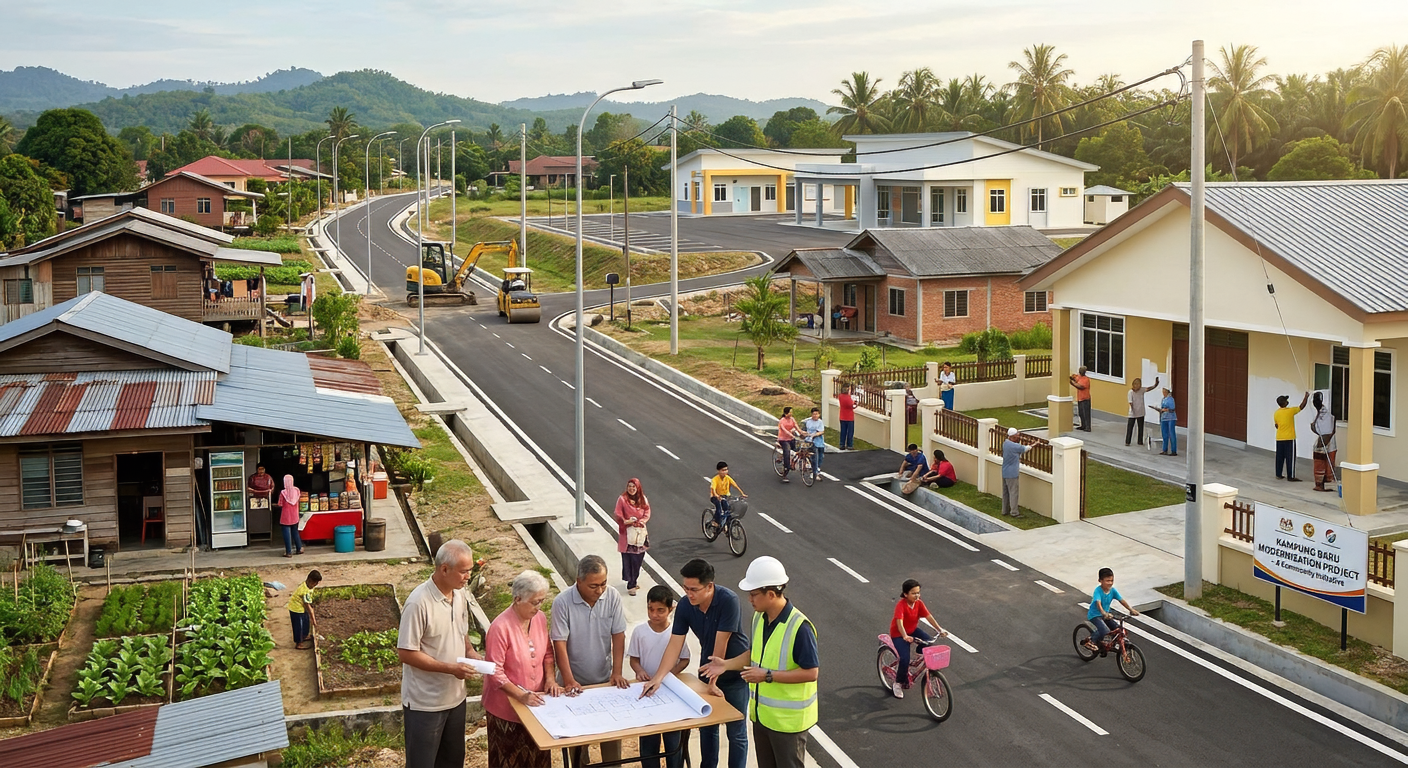
Infrastructure development remains a fundamental driver of socioeconomic advancement, particularly in rural and semi-urban environments where access to essential services directly influences economic participation, mobility, and overall quality of life. In Malaysia’s New Village communities, sustained investments in transportation networks, digital connectivity, and public utilities have established a critical foundation for local growth and development. These improvements have enabled greater access to markets, enhanced service delivery, and created new pathways for employment and entrepreneurship.
However, the effectiveness of infrastructure as a catalyst for inclusive growth is not uniform. While development initiatives have delivered measurable improvements in community well-being, the distribution of these benefits remains uneven across different socioeconomic groups. This underscores a critical insight, infrastructure alone does not guarantee equitable outcomes. Instead, its impact is significantly shaped by the strength of governance frameworks and the level of community engagement embedded within the development process.
The findings demonstrate that policy implementation and community participation function as key strategic enablers in translating infrastructure investments into tangible socioeconomic value. Well-executed policies ensure that resources are allocated efficiently, initiatives are aligned with local priorities, and development efforts are sustained over time. Concurrently, active community participation enhances relevance, ownership, and long-term viability, ensuring that projects are not only delivered but also effectively utilised and supported by residents.
At the same time, income disparities continue to present a structural challenge, influencing the extent to which different segments of the population can benefit from infrastructure improvements. Lower-income communities often face barriers in accessing new opportunities, limiting the overall inclusivity of development outcomes. This highlights the need for a more integrated and forward-looking approach, where infrastructure development is complemented by targeted interventions such as entrepreneurship support, skills development, and inclusive policy design.
Ultimately, the study reinforces a critical paradigm shift in rural development strategy. Infrastructure should not be viewed as a standalone solution, but as part of a broader ecosystem that integrates governance, community empowerment, and socioeconomic inclusivity. By aligning physical development with policy effectiveness and stakeholder engagement, organisations and policymakers can unlock greater long-term value, ensuring that infrastructure investments deliver not only growth, but sustainable and equitable progress for all communities.